Everyone is talking about AI in education like it’s the magic fix we’ve all been waiting for. Smart classrooms, personalized learning, instant feedback — sounds dreamy, right?
But the more I watch this frenzy, the more I’m convinced we’re sprinting head-first into trouble without looking where we’re going.
I’m a professional who loves technology (I’m not anti-AI), but some things happening in schools and colleges right now honestly keep me up at night. Let me break it down for you — no jargon, just real talk.
Every time a child chooses the perfect AI answer over their own messy one, a little piece of their confidence dies.
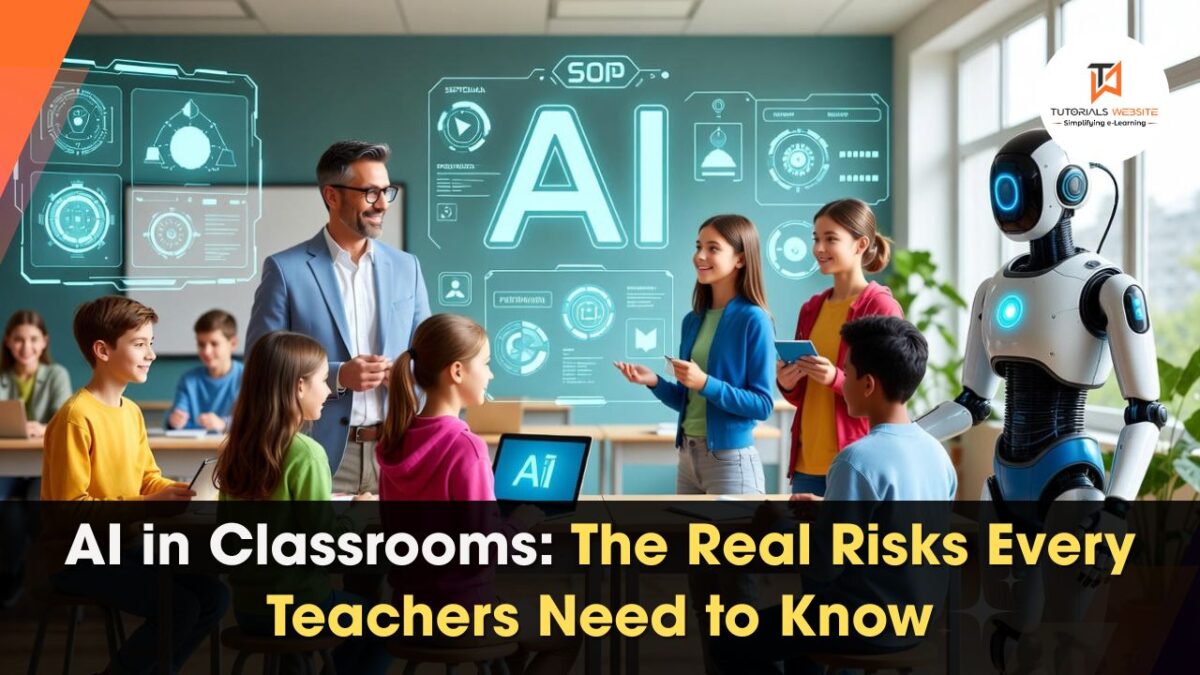
The Real Risks of AI in Classrooms Teachers Need to Know
1. We’re Training Kids to Stop Thinking (Yes, Really)
Remember the last time you wrestled with a tough problem for hours and finally cracked it? That rush? That “I’m unstoppable” feeling?
AI is quietly killing those moments.
When every essay, math solution, or science explanation is just one clever prompt away, students stop struggling. And struggling is where real learning lives.
By skipping the struggle, we’re turning out kids who can copy perfection but have no clue how to actually make something themselves.
2. The Confidence Killer Nobody Talks About
I watch it happen right in front of me. A student who used to be proud of their own words suddenly sees what ChatGPT can do and just… deflates. Eyes go dull. They stop raising their hand.
From that day on, every blank page feels like proof they’re not good enough.
“Why even try when the computer is smarter?” they think.
We keep calling it “progress.”
But it feels a lot more like teaching kids to give up on themselves.
Suggested Read: Face Swap AI: Revolutionizing Digital Content Creation
3. From Curious Humans to Prompt Engineers
Old-school curiosity: “I wonder why the sky is blue…”
New-school curiosity: “What exact words do I type to make Gemini give me an A+ answer in 3 seconds?”
We’re turning deep thinkers into hack-the-system gamers. Prompt engineering is a skill, sure — but it shouldn’t replace actual wondering.
4. Teachers Are Becoming Glorified AI Operators
Walk into any “AI for Teachers” workshop these days. 90% of the time is spent on:
- “Here’s how to make ChatGPT write your lesson plans”
- “Copy this magic prompt for perfect rubrics”
When do we talk about philosophy of education? Ethics? The art of inspiring a kid who’s having a bad day?
Almost never. We’re training teachers to be middle-managers for algorithms.
Related Read: How AI Website Builders Are Changing the Way Businesses Go Online
5. Big Tech Is Writing the Rules (And Cashing the Checks)
Let’s be honest — the loudest voices pushing AI into every classroom aren’t educators. They’re companies with billion-dollar balance sheets.
Their playbook is simple: create fear (“Fall behind or become irrelevant!”) then sell the cure.
Education is slowly becoming just another market to conquer.
So Is AI in Education Evil? No. But Blind Adoption Is Dangerous.
I’m not saying throw AI out.
Use it to grade multiple-choice tests at 2 a.m, give extra practice to kids who are falling behind. Use it to translate materials for non-native speakers. That’s beautiful.
But never forget what AI can’t do:
- Look a struggling student in the eye and say, “I believe in you”
- Teach empathy, integrity, or moral courage
- Replace the magic that happens when a human teacher and a human student connect
What We Urgently Need Before Going All-In
- Strict ethical guidelines (not just “don’t cheat” rules)
- Mandatory critical thinking classes alongside AI tools
- Data privacy laws written in stone
- Teacher training that puts pedagogy before prompts
- Regular “AI-free” assignments to keep real brains sharp
Final Thought
If we let algorithms become the main character in the classroom, we shouldn’t be surprised when our kids grow up brilliant at using tools — but clueless about building anything original.
Let’s slow down. Let’s put humans back in the driver’s seat. Because education isn’t about producing the fastest answers. It’s about raising the kind of people who ask the questions worth answering.
What do you think — are we overhyping AI in schools, or am I just an old-school professor worrying too much?
Also Read: Vibe Coding in 2025: Will Developers Still Need to Code?

Vikas Maurya is a professional blogger and Data analyst who writes about a variety of topics related to his niche, including data analysis and digital marketing.